Categories
New Construction, New Construction, VA Loans, Home Buying Tips, Hinesville GA Real Estate, Ludowici GA Real Estate, Buyer GuidesPublished August 14, 2026
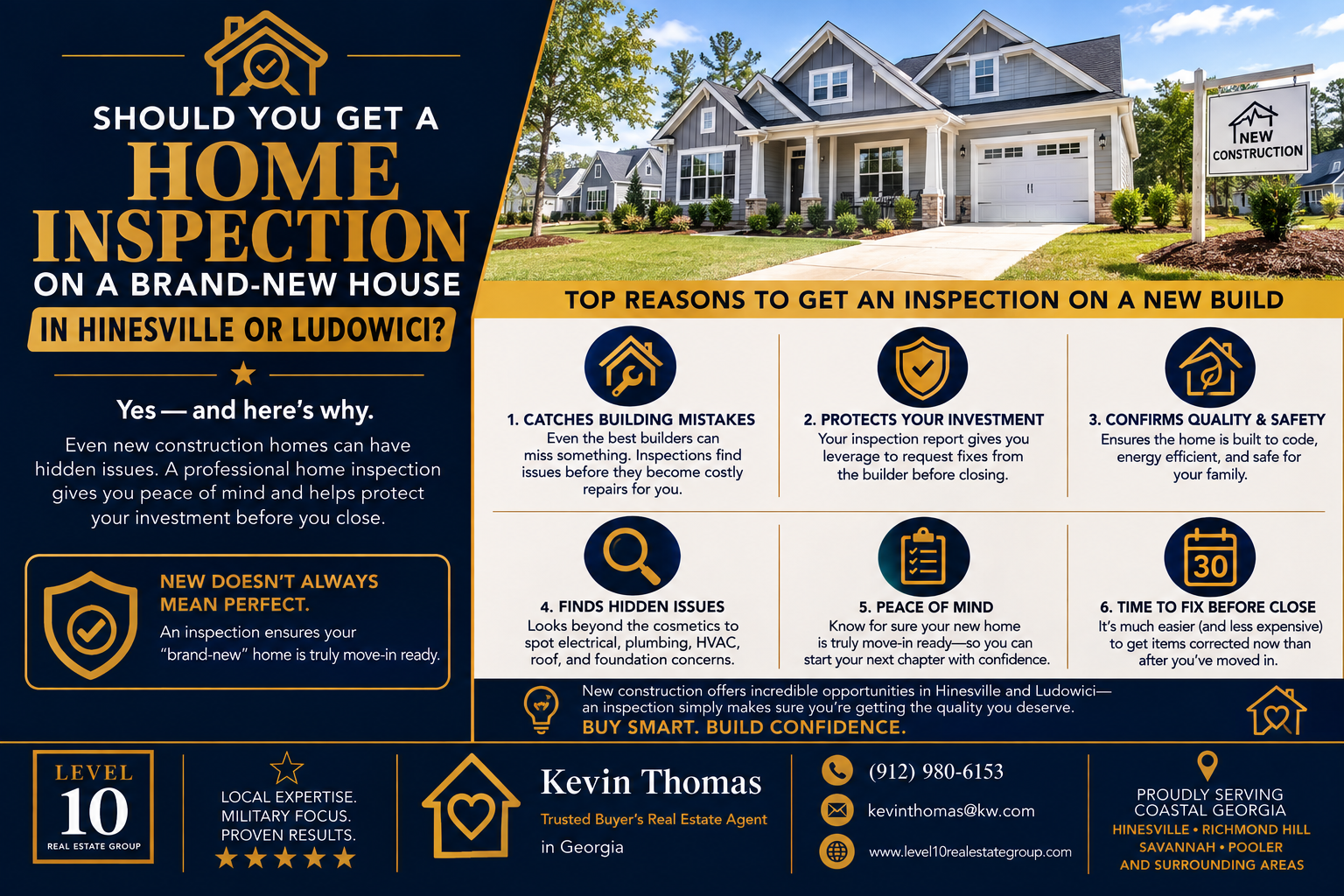
Should You Get a Home Inspection on a Brand-New House in Hinesville or Ludowici?

Written by Kevin Thomas
"It's brand new — why would I need an inspection?" is one of the most common questions new construction buyers ask, usually right before deciding to skip one. It's an understandable instinct. It's also one of the more expensive assumptions a buyer can make in this market.
👉 80–90% of new homes develop at least one warrantable defect within their first eleven months of ownership, and the county building inspector who signed off on construction is legally barred from getting on the roof to check it.
Here's why "new" doesn't mean "inspected the way you'd want it to be," and what to actually do about it.
The Misconception: "It's Brand New, Why Would I Need an Inspection?"
New construction goes through municipal building code inspections at multiple stages — foundation, framing, electrical and plumbing rough-in, insulation, and final. It's reasonable to assume that's a thorough check of the home's quality. It isn't, and understanding why is the whole point of this post.
What Municipal Code Inspectors Actually Check — and Don't
Municipal building inspectors work for the county or municipality, and their job is narrowly defined: verify that construction meets minimum code requirements, nothing more. They are not evaluating overall home quality, long-term system performance, or workmanship beyond the bare code standard.
The practical limitations are real. Municipal inspectors often have dozens of inspections scheduled in a single day, leaving very little time at any individual home. And in a detail buyers rarely know: municipal inspectors are typically not permitted to get on ladders and will not inspect the roof — one of the most expensive components of the entire home, and one that a code inspection simply never evaluates directly.
What a Private Inspector Catches That Code Inspections Miss
A private, independent home inspector works for you, not the county and not the builder. Their job is a full evaluation of the home's actual condition — systems, components, and workmanship — using a visual inspection standard specifically built around informing a buyer's decision, not verifying code compliance.
This is the gap that matters: code compliance and quality workmanship are not the same thing. A home can pass every municipal inspection and still have improperly graded drainage around the foundation, HVAC ductwork that's inadequately sealed, or moisture management details that will cause problems in this region's humidity within the first year or two — none of which a code inspector is checking for.
The Real Numbers: How Often New Construction Has Issues
This isn't a hypothetical risk. Industry data shows 80–90% of new homes develop at least one warrantable defect by the eleven-month mark. A 2023 InterNACHI survey found workmanship issues in 85% of new construction homes, with drywall cracks appearing in 45% and plumbing leaks in 30%.
Common findings include drywall cracks, roof leaks, HVAC imbalances, insulation deficiencies, and plumbing drips — plus issues that simply aren't visible at the original walkthrough, like HVAC efficiency losses, minor foundation settlement at the corners, and exterior caulking failures that only become apparent after a full seasonal cycle.
The cost math strongly favors inspecting. A private inspection typically runs $300–$500, and catching a defect while it's still covered under warranty can prevent $1,500–$15,000+ in out-of-pocket repair costs down the line.
Three Points Where an Inspection Matters Most on New Construction
1. Pre-drywall (rough-in) inspection. Before the walls close up, a private inspector can see framing, electrical, and plumbing work directly — issues that become invisible, and far more expensive to fix, once drywall goes up.
2. Final, pre-closing inspection. A full systems and cosmetic check before you close, giving you a real punch list to hand the builder rather than relying solely on your own walkthrough.
3. The 11-month warranty inspection. This is the one most buyers skip entirely, and it's arguably the most valuable. Scheduled just before your one-year builder warranty expires, it catches exactly the kind of defects — settling cracks, HVAC performance issues, caulking failures — that only show up after a full year of use and weather cycles, while there's still time to get them addressed under warranty instead of paying for them yourself.
Why the Builder's Warranty Doesn't Replace an Inspection
A builder warranty only fixes what you know to report. It doesn't proactively find problems for you — that responsibility sits entirely with the homeowner. A private inspection, especially the 11-month version, is what actually surfaces issues while they're still the builder's obligation to fix, rather than becoming your expense the day after the warranty period closes.
What This Looks Like for New Construction in Hinesville or Ludowici
This region's humidity makes moisture management — grading, flashing, crawl space vapor barriers — one of the most consequential things a private inspector can catch that a code inspection won't specifically flag. Combined with the builder financing and representation considerations already worth knowing before you visit a model home in either city, an independent inspection is simply part of doing new construction right in this market, not an optional extra for buyers who happen to be cautious.
Why Work With Kevin Thomas
Knowing when to schedule an independent inspection — and making sure it actually happens at the right points in the build — protects your investment well beyond the day you get your keys. Kevin Thomas is a trusted buyer's agent and marketing strategist serving Coastal Georgia, with deep experience helping military families and relocating buyers navigate new construction purchases in Hinesville, Ludowici, and throughout Liberty and Long County.
Working with Kevin means:
✔️ Guidance on scheduling pre-drywall, final, and 11-month warranty inspections at the right time ✔️ Recommendations for qualified independent inspectors, not just the builder's own walkthrough ✔️ A clear punch list strategy so defects get fixed before you close, not after ✔️ A reminder system so your 11-month warranty inspection doesn't slip past the deadline ✔️ Representation that looks out for your interests, not the builder's construction schedule
Your Next Step
Call or text Kevin Thomas: (912) 980-6153 Before you close on new construction in Hinesville or Ludowici, make sure an independent inspection is part of your plan — not an afterthought.
Kevin Thomas with Level 10 Real Estate Group helps Coastal Georgia buyers protect their new construction investment well past closing day.

Karyn Thomas
Lead Listing Agent/ Co-Team Owner | Level 10 Real Estate Group | Keller Williams Coastal Area Partners
or another way