Categories
Home Buying Tips, Coastal Georgia Homes, Buyer Guides, VA Loan Guide, VA Loan Tips, Military RelocationPublished August 9, 2026
The Most Common Problems Found During Home Inspections in Coastal Georgia

Written by Kevin Thomas
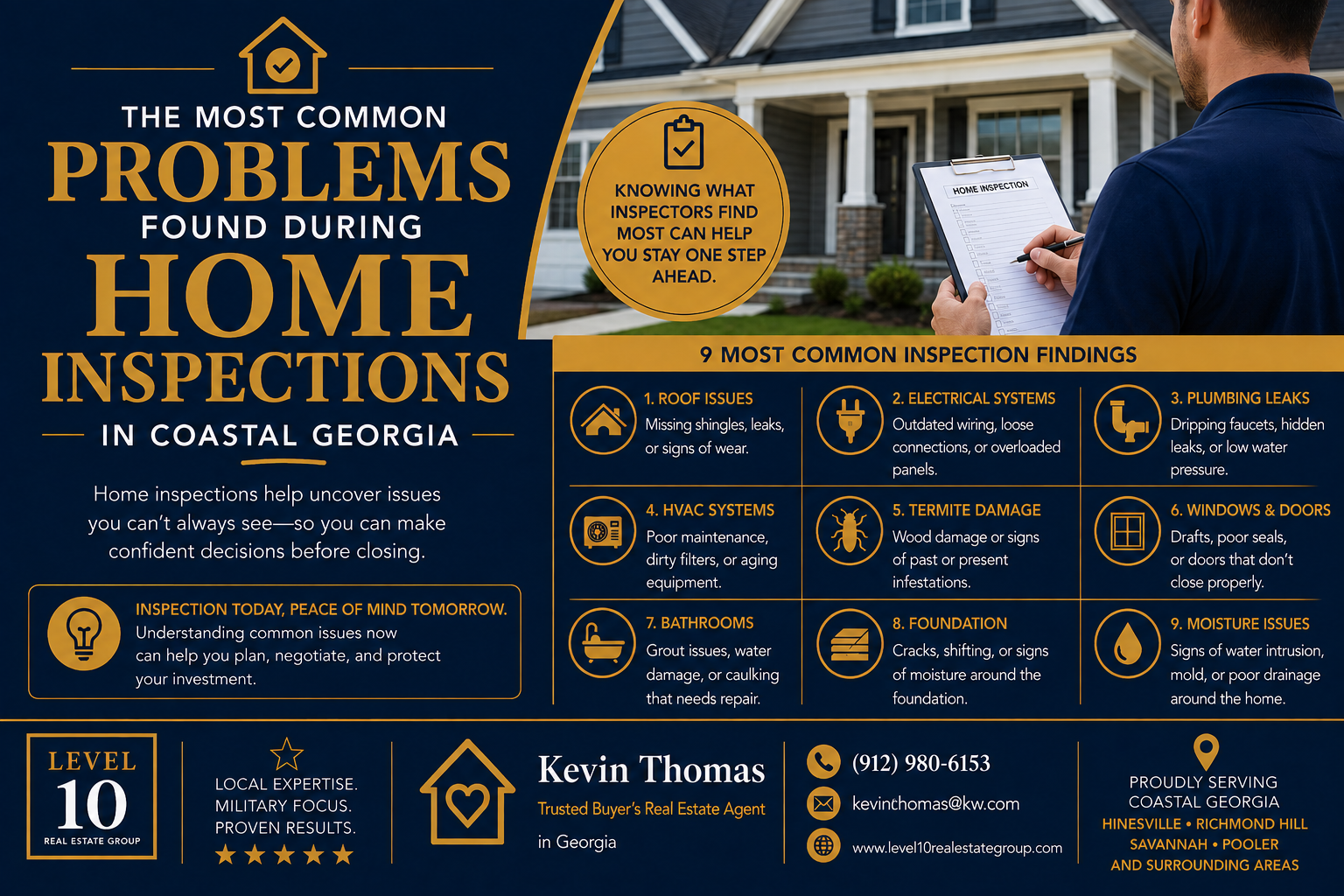
Every home inspection turns up something. The question that actually matters isn't whether the report comes back clean — it almost never does — it's whether what's found is a normal regional quirk or a real red flag. Coastal Georgia's humidity, soil, and older housing stock produce a predictable pattern of findings, and knowing that pattern in advance changes how you read your own inspection report.
👉 Crawl space moisture is the single most common renegotiation driver in Coastal Georgia home inspections — more often than roofing, electrical, or foundation issues combined — because this region's humidity turns a damp crawl space into a chain reaction of wood rot, pest activity, and indoor air quality problems.
Here's what actually shows up most often, and what each finding really means for your offer.
Crawl Space Moisture: The Region's Most Common Finding
Once relative humidity under a home climbs above roughly 60%, the wood framing itself begins absorbing moisture — and that's when problems compound. Inspectors in this region routinely find standing water or damp soil after rain, condensation on ductwork and floor framing, wood rot in joists and subflooring, visible fungal growth, and the musty odor that comes with it.
This matters beyond the crawl space itself. Up to half of the air on a home's first floor originates in the crawl space beneath it — so moisture and mold down there directly affect indoor air quality upstairs, not just structural integrity. A vapor barrier in poor condition or a completely absent one is one of the most common and most fixable findings inspectors flag in this market.
Termite and Wood-Destroying Organism (WDO) Activity
Termites are active virtually statewide in Georgia, and a damp crawl space is exactly the environment they're drawn to. Some areas of coastal Georgia's higher-humidity zones have also seen activity from Formosan termites — a more aggressive subterranean species than the native varieties most homeowners are used to hearing about.
This is exactly why a WDO inspection and current termite bond are standard requirements on VA-financed purchases in this market, and why a lapsed or absent termite bond on an older home is one of the most common items that comes up during due diligence.
HVAC Systems Under Coastal Humidity Strain
Air conditioning in this climate does more than cool — it's constantly pulling moisture out of the air, and that extra workload shows up in equipment lifespan. Coastal Georgia HVAC systems often need replacement at 10–12 years, well short of the 15–20 years manufacturers advertise for more temperate climates. An inspector flagging an aging system here isn't being overly cautious — it's a realistic regional timeline, and it's worth factoring into your offer on any home with an original system past the 8–10 year mark.
Roofing: Algae Staining vs. Real Damage
Dark streaking on a roof is one of the most common cosmetic findings in humid Southeast climates, and it's frequently mistaken for a bigger problem than it is. In most cases, those streaks are algae growth, not structural damage — a maintenance item, not a red flag. That said, a good inspector will distinguish this clearly from actual granule loss, flashing issues, or roof age concerns, which are the findings that genuinely affect your negotiation.
Older Home Electrical Systems
Homes built before the mid-1980s in this region commonly turn up a few recurring electrical findings: outdated panel brands no longer considered reliable by many inspectors and insurers, aluminum wiring in homes built roughly in the 1960s–1970s, and ungrounded outlets in original, unrenovated circuits. None of these are automatically deal-breakers, but they're common enough in this market's older housing stock that budgeting for an electrician's evaluation is a smart step before finalizing an offer on an older resale home.
Plumbing: Polybutylene and Galvanized Pipe Concerns
Homes built roughly between the late 1970s and mid-1990s sometimes have polybutylene piping, a material known for a higher failure rate than modern PEX or copper. Older homes may also still have galvanized steel supply lines, which corrode internally over decades and gradually restrict water flow even when there's no visible leak. Both are common enough findings in this market's resale inventory to specifically ask about during your inspection period, particularly on homes from those construction eras.
Septic Systems in Rural Coastal Georgia
Outside the more developed corridors — Ludowici, Midway, and parts of Guyton in particular — many homes rely on septic systems rather than municipal sewer. A septic inspection and pump-out verification is a standard and important addition to your due diligence on any property in these areas, and VA financing specifically requires the system to be functioning properly at closing. Don't skip this inspection just because the home otherwise looks move-in ready — septic issues are expensive to discover after closing.
Radon: Low Risk Zone, But Still Worth Testing
Chatham, Liberty, and Bryan counties all fall within EPA Radon Zone 3, the lowest risk classification, with predicted average indoor levels under 2 pCi/L. That's genuinely good news for this market compared to north Georgia's granite-heavy terrain. That said, zone classifications are averages, not guarantees — individual homes can still test higher than their county's typical range. A radon test is inexpensive relative to the peace of mind it provides, and it's worth doing regardless of the favorable zone classification.
What This Means for Your Offer and Due Diligence Period
None of these findings are automatically deal-breakers — most are normal, expected, and negotiable in this specific market. What matters is using your Due Diligence Period fully: schedule your inspection early enough to review findings and negotiate repairs or credits before that unrestricted cancellation window closes, and don't assume a clean-sounding inspection report means there's nothing to negotiate. Crawl space moisture, an aging HVAC system, or a lapsed termite bond are all common, real, and usually negotiable — but only if you act on them within your contract's timeline.
Why Work With Kevin Thomas
Knowing what's a normal regional finding and what's a genuine red flag is exactly the kind of judgment that protects buyers during due diligence. Kevin Thomas is a trusted buyer's agent and marketing strategist serving Coastal Georgia, with deep experience guiding military families and relocating buyers through inspections, negotiations, and repair requests throughout Hinesville, Richmond Hill, Savannah, and the surrounding region.
Working with Kevin means:
✔️ Inspection findings explained in real terms — what's routine here versus what's a genuine concern ✔️ Negotiation support for repairs, credits, or price adjustments based on what your inspection actually turns up ✔️ Guidance on septic, termite bond, and HVAC age issues specific to this region's housing stock ✔️ A Due Diligence Period used strategically, not just as a formality ✔️ An advocate who knows this market's common findings well enough to tell you what's worth negotiating
Your Next Step
Call or text Kevin Thomas: (912) 980-6153 Before your inspection period runs out, make sure you know what's actually worth negotiating — and what's just normal for this region.
Kevin Thomas with Level 10 Real Estate Group helps Coastal Georgia buyers navigate inspections with realistic expectations and real negotiating leverage.

Karyn Thomas
Lead Listing Agent/ Co-Team Owner | Level 10 Real Estate Group | Keller Williams Coastal Area Partners
or another way