
Categories
VA Loan Guide, VA Loan Tips, Buyer Guides, Home Buying Tips, Fort Stewart Area Homes, Fort Stewart PCS, Fort Stewart Real Estate, Military RelocationPublished October 10, 2026
VA Appraisal vs. Home Inspection: What Military Buyers Need to Know

Written by Kevin Thomas
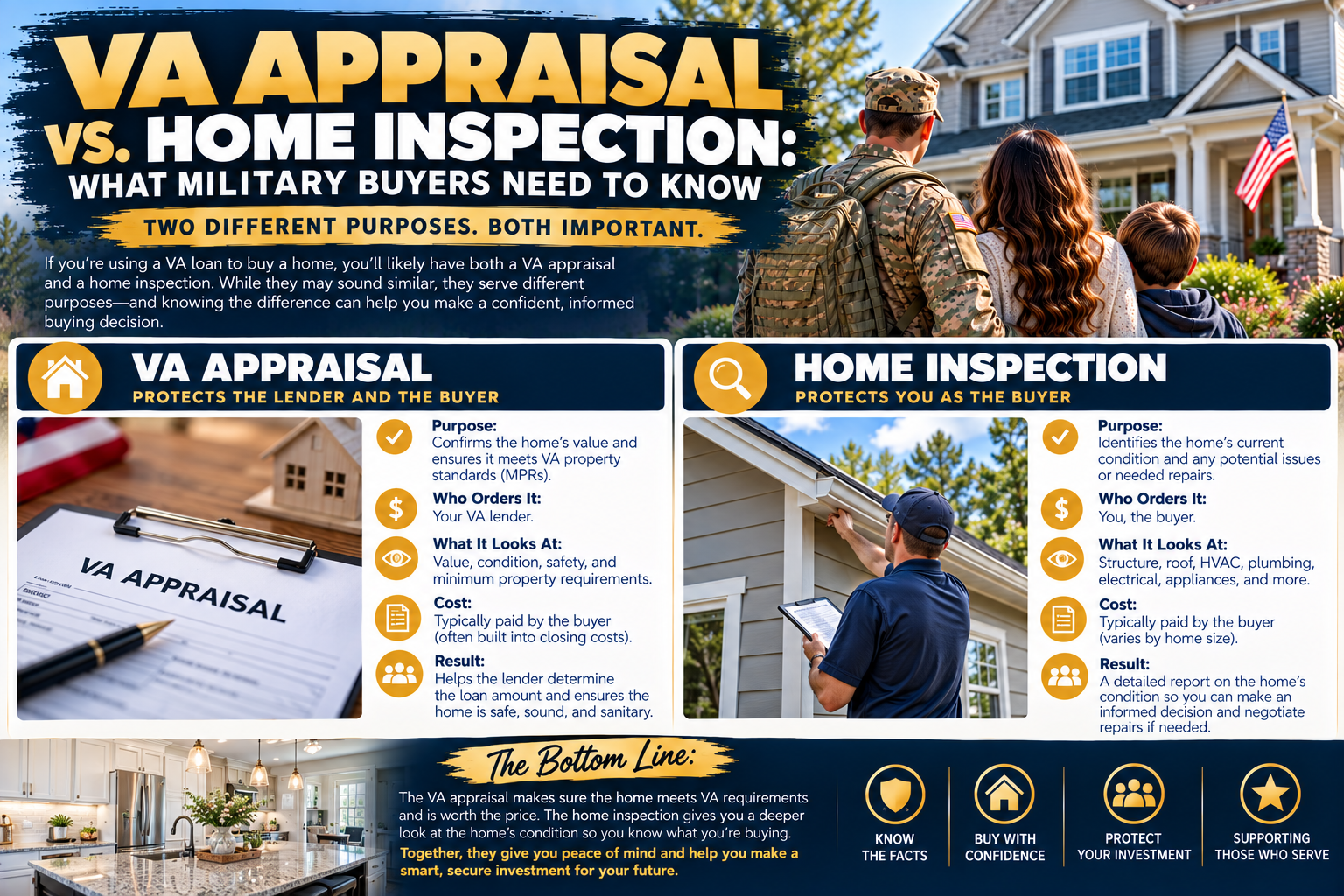
These two terms get used almost interchangeably by first-time VA buyers, and that mix-up causes real problems — usually when someone skips the inspection because "the appraisal already checked the house." They're genuinely different processes, done by different people, for different reasons, and understanding that difference protects you more than either one alone.
👉 A VA appraisal protects the lender and confirms the home meets minimum livability standards. A home inspection protects you, the buyer, by evaluating the home's actual condition in depth. Skipping the inspection because the appraisal passed is one of the most common and costly mistakes VA buyers make.
Here's exactly how they differ.
What a VA Appraisal Actually Does
The VA appraisal has two jobs: confirming the home's market value supports the loan amount, and verifying the property meets VA's Minimum Property Requirements (MPRs) — safety and livability basics like a functioning heating system, a sound roof, no exposed wiring, and no major structural issues. The appraisal is ordered by the lender and exists primarily to protect the lender's and VA's financial interest in the loan — it is not a service performed on your behalf as the buyer, even though you typically pay for it.
VA appraisals typically take 7–14 business days in urban and suburban markets, stretching to 15–21 business days in more rural areas with fewer VA-certified appraisers.
What a Home Inspection Actually Does
A home inspection is a voluntary, in-depth evaluation of the property's condition, conducted by a licensed inspector you hire specifically to represent your interests as the buyer. Inspectors examine the roof, HVAC system, electrical panel, plumbing, foundation, attic, and far more — producing a detailed report that goes well beyond the basic livability standards an appraisal checks. This is the step that actually protects you from buying a home with expensive problems the appraisal has no reason to catch, because finding those problems isn't what an appraisal is designed to do.
Side by Side: The Key Differences
Who it protects: The appraisal protects the lender. The inspection protects you.
Who orders it: The lender orders the appraisal. You, the buyer, choose and hire your own inspector.
What it evaluates: The appraisal checks value and basic MPR compliance. The inspection evaluates the home's full condition in detail.
Is it required: The appraisal is required for VA financing to close. The inspection is optional — and skipping it is a choice with real risk attached.
What happens if issues are found: An MPR issue found during appraisal typically must be repaired before the loan can close. Issues found during inspection are negotiable between you and the seller — repair, credit, or price adjustment — but nothing forces the seller to fix them.
Why Passing the Appraisal Doesn't Mean the Home Is Fine
A home can meet every VA Minimum Property Requirement and still have significant, expensive problems an appraisal was never designed to catch — an aging HVAC system near the end of its life, hidden plumbing issues, or electrical work that's functional but outdated. The appraisal confirming the home is "livable" is a very different statement than an inspector confirming the home is in good condition. Treating a passed appraisal as a clean bill of health is exactly the assumption that leads to buyers skipping the one step that would have actually protected them.
What to Actually Do
Always get your own inspection, regardless of how confident you feel about the home or what the appraisal shows. The cost of an inspection is small compared to the cost of an unexpected major repair discovered after closing.
Schedule your inspection early in your due diligence period, giving yourself time to negotiate repairs or credits before your contingency deadline passes.
Don't confuse an MPR repair requirement with a full home evaluation — passing the appraisal's livability bar tells you very little about the home's overall condition.
Review your inspection report carefully and ask your agent which findings are worth negotiating versus which are normal wear for the home's age.
Why Work With Kevin Thomas
Understanding exactly what each process does — and doesn't — protect you from is what keeps a VA purchase from turning into a post-closing surprise. Kevin Thomas is a trusted buyer's agent and marketing strategist serving Coastal Georgia, and a U.S. Army veteran who makes sure every VA buyer understands this distinction clearly before they're under contract.
Working with Kevin means:
✔️ Clear guidance on what the appraisal does and doesn't cover before you assume it's enough ✔️ A trusted inspector referral so you're never skipping this step out of convenience ✔️ Support negotiating repairs or credits based on real inspection findings ✔️ Realistic appraisal timeline expectations for your specific target area ✔️ An advocate who protects your interests, not just the lender's
Your Next Step
Call or text Kevin Thomas: (912) 980-6153 Don't rely on the appraisal alone to tell you what you're actually buying.
Kevin Thomas with Level 10 Real Estate Group helps military buyers understand exactly what protects them, and what doesn't.

Karyn Thomas
Lead Listing Agent/ Co-Team Owner | Level 10 Real Estate Group | Keller Williams Coastal Area Partners
or another way