Categories
VA Loan Guide, VA Loan Tips, Buyer Guides, Home Buying Tips, Fort Stewart Real EstatePublished November 14, 2026
VA Loan Closing Costs Explained: What Veterans Actually Pay at the Table

Written by Kevin Thomas
"Zero down" is the headline everyone remembers about VA loans. What gets lost is that zero down doesn't mean zero cost. There are still closing costs — and the first time many veterans see the full list is a few days before closing. Knowing what to expect ahead of time takes a lot of the stress out of that moment.
👉 VA buyers still pay closing costs, but VA rules limit some lender fees, and the biggest single cost — the VA funding fee — can be rolled into the loan or waived entirely for veterans receiving VA disability compensation. Sellers can also pay some or all of your closing costs. With the right offer, many VA buyers bring very little cash to the table.
Here's what you'll actually pay.
The VA Funding Fee
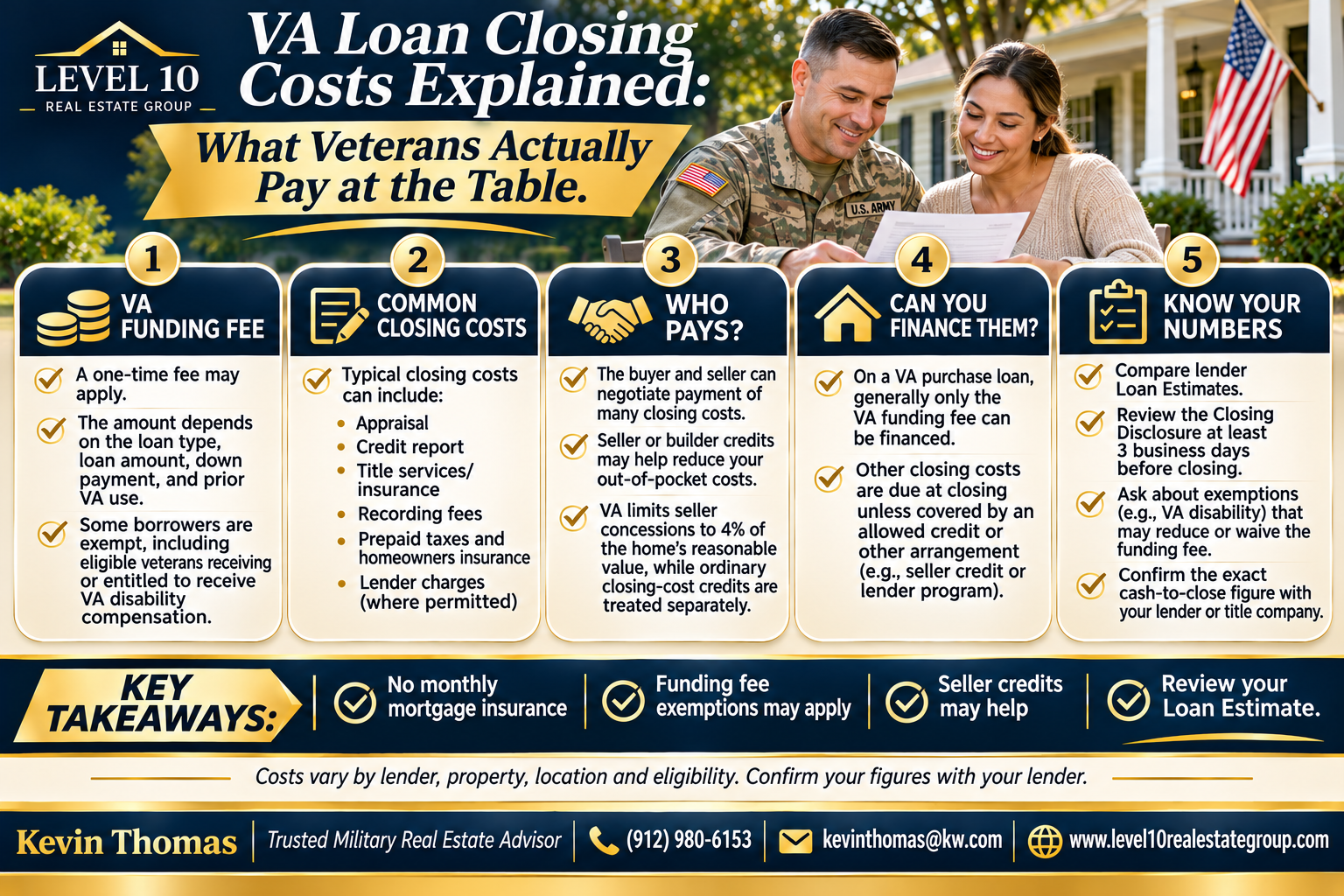
The funding fee is a one-time charge that helps keep the VA loan program running. For a purchase with less than 5% down, it's 2.15% of the loan amount the first time you use your benefit, and 3.3% for later uses. Putting at least 5% down lowers it to 1.5%, and 10% or more lowers it to 1.25%.
On a $300,000 loan with zero down, that's $6,450 for first use. Most buyers roll the funding fee into the loan instead of paying it in cash at closing.
Many veterans don't pay it at all. Veterans receiving VA disability compensation are generally exempt, and certain others, like some surviving spouses, may be too. Make sure your lender has your disability information on file early so your estimates are right.
Lender Fees and VA Limits
VA rules limit what lenders can charge veterans. Lenders can generally charge either a flat origination fee of up to 1% of the loan, or itemized fees, but not stack extra junk fees on top. Some fees that are common on other loans aren't allowed to be charged to the veteran on a VA loan.
You may also see discount points if you choose to pay to lower your interest rate. That's optional, and it's worth asking your lender whether the savings over time are worth the upfront cost.
Compare Loan Estimates from more than one lender. Fees and rates can vary, and the comparison is the easiest way to spot a better deal.
Third-Party Costs and Prepaids
Beyond the lender, you'll see costs from other parties involved in the sale. Common ones include the VA appraisal, title insurance and title services, recording fees, and a credit report.
Then there are prepaids and escrows. These cover your first homeowners insurance premium and set aside money for property taxes and insurance going forward. They're not really fees — they're costs of owning the home — but they still show up at closing.
Don't forget costs outside closing. Your home inspection, a termite inspection, and earnest money are usually paid before closing, so plan for that cash even if your loan is zero down. Earnest money is typically credited back to you at closing.
How to Bring Less Cash to Closing
Ask the seller to pay closing costs. Sellers can pay all of your normal closing costs on a VA loan, plus additional concessions up to VA's limit. Your agent can write this into your offer.
Look at builder incentives. On new construction, builders often offer closing cost help, especially at year-end. Compare it with what your own lender offers.
Use a lender credit. Some lenders will cover part of your closing costs in exchange for a slightly higher rate. It can make sense if you're short on cash, but ask how it affects your payment over time.
Roll in the funding fee. Financing the funding fee keeps it from coming out of your pocket at closing.
What to Actually Do
Ask for a Loan Estimate early. It lists your expected closing costs line by line.
Get your disability rating on file. If you qualify, it can remove the funding fee entirely.
Ask for seller-paid closing costs in your offer. It's one of the easiest ways to lower your cash to close.
Budget for costs before closing. Plan for the inspection, termite inspection, and earnest money.
Review your Closing Disclosure carefully. Compare it with your Loan Estimate and ask about anything that changed.
Why Work With Kevin Thomas
Zero down is a great benefit, but the details at closing are where buyers save or lose real money. Kevin Thomas is a trusted buyer's agent and marketing strategist serving Coastal Georgia, and a U.S. Army veteran who helps VA buyers keep more cash in their pocket at closing.
Working with Kevin means:
✔️ Offers written to include seller-paid closing costs
✔️ Introductions to VA lenders who know the fee limits and exemptions
✔️ Help comparing builder incentives with your own lender's offer
✔️ A clear walkthrough of your Loan Estimate and Closing Disclosure
✔️ An advocate who makes sure there are no surprises at the table
Your Next Step
Call or text Kevin Thomas: (912) 980-6153 Wondering what you'll really pay at closing? Let's go over your numbers together.
Kevin Thomas with Level 10 Real Estate Group helps military buyers walk into closing knowing exactly what to expect.

Karyn Thomas
Lead Listing Agent/ Co-Team Owner | Level 10 Real Estate Group | Keller Williams Coastal Area Partners
or another way