Categories
VA Loan Tips, Buyer Guides, Fort Stewart Area Homes, Fort Stewart PCS, Fort Stewart Real EstatePublished November 3, 2026
Georgia's Disabled Veteran Homestead Exemption: What It Is and How to Apply

Written by Kevin Thomas
If you're a disabled veteran who owns a home in Georgia, you may be paying more in property taxes than you need to. Georgia offers one of the more generous homestead exemptions for disabled veterans in the country, but it isn't automatic. You have to apply, and if you miss the deadline, you wait another year for the savings.
👉 Georgia's disabled veteran homestead exemption removes a large portion of your home's assessed value from property taxes — $126,526 for tax year 2026. It covers state, county, city, and school taxes, and certain surviving spouses and minor children can qualify too. You file once with your county, and the deadline is April 1 for the current tax year.
Here's how it works.
What the Exemption Is and How Much It's Worth
The exemption takes a set dollar amount off your home's assessed value before property taxes are calculated. For tax year 2026, that amount is $126,526. It's tied to a federal VA figure, so it's adjusted each year.
It applies to state, county, municipal, and school property taxes, which is where most of your bill comes from. Any value above the exemption amount is still taxable, so your bill may not drop to zero, but for many homes around Fort Stewart the savings are significant.
You may also qualify for other exemptions at the same time, like the standard homestead exemption or local senior exemptions. Ask your county about every exemption you're eligible for when you file.
Who Qualifies
The exemption is for honorably discharged veterans who are Georgia residents and meet the state's disability criteria. In general, that means veterans with a 100% service-connected disability rating, those paid at the 100% rate, or those with certain specific service-connected losses. Your county tax office can confirm whether your rating qualifies.
You must own the home and live in it as your primary residence as of January 1 of the tax year you're applying for.
Surviving spouses and minor children can qualify too. An unremarried surviving spouse or minor child of a qualifying disabled veteran may be able to keep or claim the exemption. Only one person can claim it based on any one veteran.
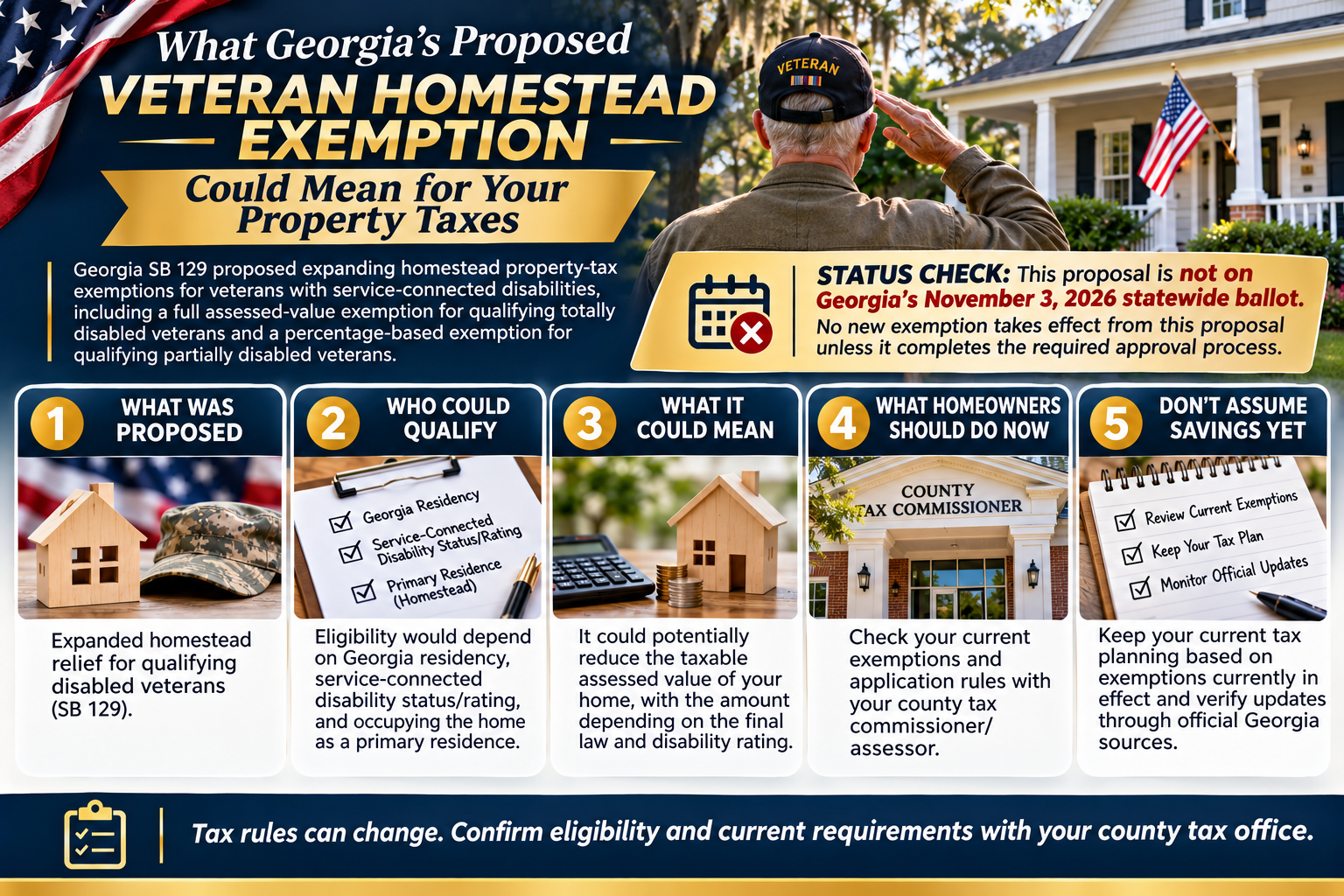
Note: In 2026, Georgia lawmakers proposed expanding this exemption, including a partial exemption for partially disabled veterans, but those proposals did not make the November 2026 ballot. The rules above are the ones in effect today.
How and When to Apply
You apply with your county, not the state or the VA. In the Fort Stewart area, that means the tax assessor or tax commissioner's office in the county where your home is, such as Liberty, Long, or Bryan County.
The deadline is April 1. Applications can be filed any time during the year, but they must be in by April 1 to count for the current tax year. File after April 1 and the exemption starts the following year.
Bring your paperwork. Plan on your VA disability rating letter, proof of Georgia residency like a driver's license with the property address, and your deed or closing documents. Surviving spouses will usually need additional documents, such as the veteran's death certificate and marriage documentation.
In most cases, you file once. After it's approved, the exemption generally stays in place as long as you own and live in the home, but you must let the county know if your eligibility changes.
What to Actually Do
Check your rating against the county's criteria. Call your county tax office if you're not sure whether you qualify.
Gather your documents now. Your VA rating letter, ID, and deed make the filing quick.
File right after closing if you're buying. Don't wait for your first tax bill. Get it in before April 1.
Ask about every exemption you qualify for. You may be able to stack the disabled veteran exemption with others.
Tell a veteran you know. Many eligible veterans and surviving spouses never apply simply because no one told them.
Why Work With Kevin Thomas
The right home is only part of the picture. Keeping your costs down after closing matters just as much. Kevin Thomas is a trusted buyer's agent and marketing strategist serving Coastal Georgia, and a U.S. Army veteran who makes sure fellow veterans know about the benefits that can lower what they pay long after move-in.
Working with Kevin means:
✔️ A reminder to file your homestead exemptions right after closing
✔️ Local knowledge of county tax offices in Liberty, Long, and Bryan counties
✔️ Introductions to VA lenders who know the funding fee exemption for disabled veterans
✔️ Help comparing homes with your real after-exemption tax costs in mind
✔️ An advocate who understands the benefits you earned
Your Next Step
Call or text Kevin Thomas: (912) 980-6153 Buying a home as a disabled veteran? Let's make sure you get every benefit you've earned.
Kevin Thomas with Level 10 Real Estate Group helps veterans keep more of what they earned, long after closing day.

Karyn Thomas
Lead Listing Agent/ Co-Team Owner | Level 10 Real Estate Group | Keller Williams Coastal Area Partners
or another way